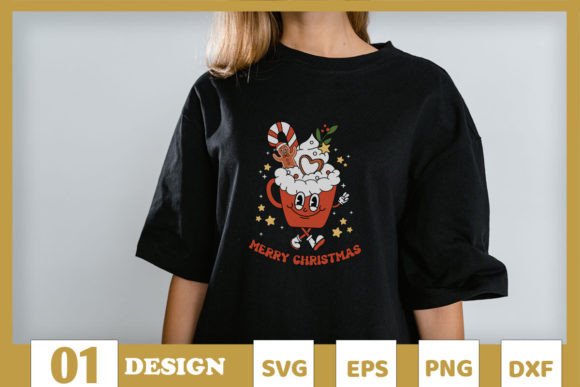
Merry Christmas Retro Cocoa Cup
A Designer’s First Look: Warm, Nostalgic, and Just Right for Holiday Stitching
When I opened Merry Christmas Retro Cocoa Cup in my design software, the first thing that struck me wasn’t just the cup—it was the feeling. That soft cocoa steam curling upward, the bold but friendly “Merry Christmas” script, the subtle holly sprig tucked beside the handle—it’s nostalgic without being cloying, festive without shouting. As a designer who’s stitched hundreds of holiday motifs for clients and small shops, I immediately pictured it on a heavyweight cotton tote bag lined with cream flannel—something cozy, handmade, and quietly confident. Not flashy. Not fussy. Just right.
Where This Design Naturally Lives (and Thrives)
Merry Christmas Retro Cocoa Cup isn’t built for maximalist sweatshirt sleeves or crowded onesies. It’s at its best where warmth and intention meet: embroidered pillow covers for a holiday guest room, tea towels for a local café’s seasonal lineup, baby bodysuits in heather grey, or minimalist aprons for artisanal bakeries. I tested it as a 3.5" wide machine embroidery design on a medium-weight twill apron—and the balance held. The cup shape anchors the composition, the lettering stays legible even at that scale, and the negative space around the steam and holly gives the stitches room to breathe. For Etsy sellers and craft fair vendors, this is a strong candidate for a cohesive holiday collection: pair it with matching patch sets, printable mockups, and simple fabric gift tags.
What Works Smoothly in Real Embroidery Use
- Custom apparel: Stitches cleanly on midweight cotton tees and fleece-lined sweatshirts—no thread nesting or puckering when paired with tear-away stabilizer.
- Embroidered patch: Holds crisp edges as a sew-on or iron-on patch; the satin stitch on the cup rim reads clearly, not muddy.
- Baby embroidery: Gentle curves and open shapes avoid dense fill stitch clusters—ideal for delicate fabrics like interlock knit.
- Holiday gifts & boutique branding: Its retro charm reads as thoughtful, not mass-produced—perfect for handmade product storytelling.
- Digital embroidery file versatility: The SVG and PNG versions let you resize confidently for mockups, while the DXF helps with vector-based layout planning.
Where to Pause—and Plan Ahead
This isn’t a one-size-fits-all embroidery file. On curved surfaces like structured caps, the cup’s rounded base may need slight digitizing tweaks to avoid distortion—especially if stitching near the bill seam. On textured fabrics (think terry cloth towels or bouclé blankets), the fine steam line and small holly details can blur unless you use cutaway stabilizer and reduce stitch density slightly. And while the design avoids tiny lettering, the “Cocoa Cup” subline sits close to the lower edge—if hooping low on a thin fabric like rayon challis, watch for pull-through on the back.
Dark fabric? No problem—but test your thread colors first. A warm brown satin stitch for the cup reads richer over navy than black, and off-white for the steam pops better on charcoal than deep burgundy. Also: avoid layering this over thick seams or bulky pockets. The design’s charm lies in its clean silhouette—not in fighting fabric topography.
Design Impact Beyond the Hoop
As a T-Shirt Designs asset, Merry Christmas Retro Cocoa Cup stands out because it doesn’t lean on trend-chasing. It builds trust—not through novelty, but consistency. Customers recognize sincerity in balanced spacing, intentional negative space, and typography that feels hand-drawn, not auto-traced. When used on a personalized gift—a monogrammed mug cozy with this motif stitched subtly at the corner—it elevates perceived value. For small shop owners, that translates to higher average order value and repeat buyers who associate your brand with warmth, not wallpaper.
I’ve seen similar graphics fail in commercial embroidery because they’re too dense or too tight. This one avoids that trap. Its fill stitch areas are generous but not heavy; its running stitch outlines are purposeful, not decorative clutter. That makes it durable across wash cycles—critical for kitchen towels, baby items, and everyday apparel.
Practical Notes Every Embroidery Designer Should Check
- Test Merry Christmas Retro Cocoa Cup on scrap fabric *first*—especially if using stretchy or dark substrates.
- Review stitch density in your embroidery software. If it feels heavy for your fabric weight, adjust underlay or reduce fill angle.
- Confirm hoop size compatibility. Though pre-sized, double-check whether your machine’s standard hoop fits the full design comfortably.
- Inspect small details at 200% zoom: the holly leaf points, steam wisps, and serif endings on “Merry”—are they clean, or do they risk fraying?
- Run a black-and-white mockup. Does contrast hold? Will it read well on both light and dark backgrounds?
- Use appropriate stabilizer: tear-away for stable wovens, cutaway for knits or textured weaves.
- Verify licensing terms before listing finished products or reselling digital files—this matters for Etsy sellers and digital product creators.
Final Thought: A Quietly Confident Holiday Staple
Merry Christmas Retro Cocoa Cup won’t dominate a holiday catalog—but it’ll anchor one. It’s the kind of Graphics asset that earns repeat use because it works, not because it shouts. Whether you’re stitching a single custom gift or building a full holiday line for your craft business, this design supports your voice instead of overriding it. It’s warm, well-proportioned, and respectful of fabric, thread, and time. In a season full of noise, that’s the most valuable detail of all.